Thanks to Emma Bevan for this lesson on the Siege of York 1644 that could form part of teaching the Civil War. The resources are here: The Siege of York Siege of York Information Sheet and the link to the film clip on the PPT is here.

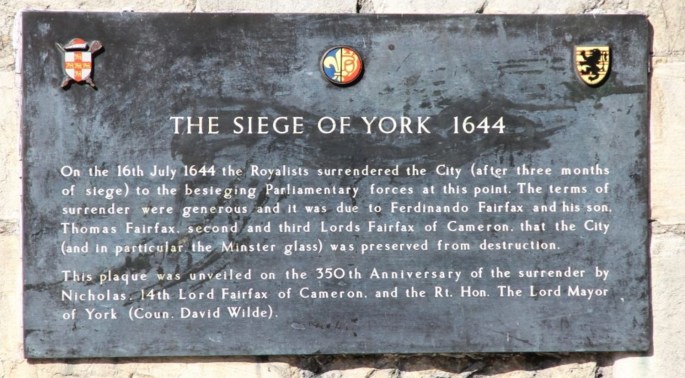
Thanks to Emma Bevan for this lesson on the Siege of York 1644 that could form part of teaching the Civil War. The resources are here: The Siege of York Siege of York Information Sheet and the link to the film clip on the PPT is here.
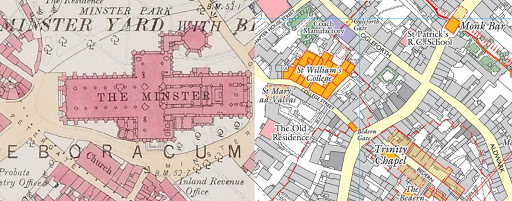
New for helping students to learn about the history of York: A History of York in Maps. In this G-drive folder you will find a history of York in several parts using the maps of the British Historic Towns Atlas Vol 5 on York. This brilliant interpretation with maps and a gazetteer was finally completed in 2015 and is part of the European historic towns atlas project that began shortly after the Second World War.
This History of York in maps is for students and teachers and it uses the maps to explain the development or York over time, from the arrival of the Romans in 71CE to modern times. Several themes are developed: political power, military power, religion, education, trade and industry.
The History is divided into parts:
(The format is .mov, and can be converted to mp4 using free online software if needed.)
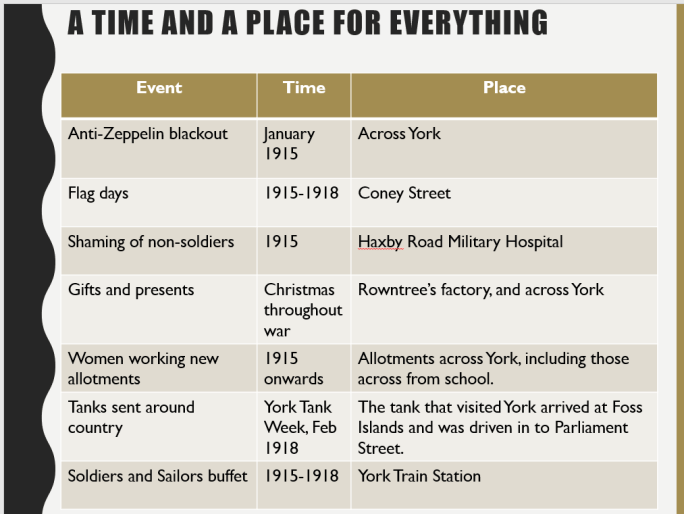
Hugh Richards has shared this PPT used by the Huntington School History department. Nice local history connection to the wider topic for York teachers re World War One.

This is a history of York in 14 life stories that is designed for students working away from school. The lives of 14 people across the ages are used to help students learn about York and the wider world. The whole activity is very large. It can be done in sections. Each life story is written, but there is also a sound narration for students who find reading harder. Every story makes sense on its own, but there are also ‘think’ questions. For students who have more time and want to go further there are research ideas connected to each story. There are also a wider range of activity ideas of different types. Finally, there are three options: small, large and larger to summarise the whole project.
The PPT is large and so it is shared via OneDrive here: Link to the online resource PPT
(Tip: If the PPT is too large to handle, or you need to convert it to .pptx, then simply take out the sound files from each of the stories and put them in a separate zip file to share with students.)

This is where we will post the first person 17th Century Stories over the next couple of months.
Mary Belasye, Countess Falconberg
More coming soon!!!
If you are interested in other sets of first person resources, there are some from 1945-49 available here: historiana.eu

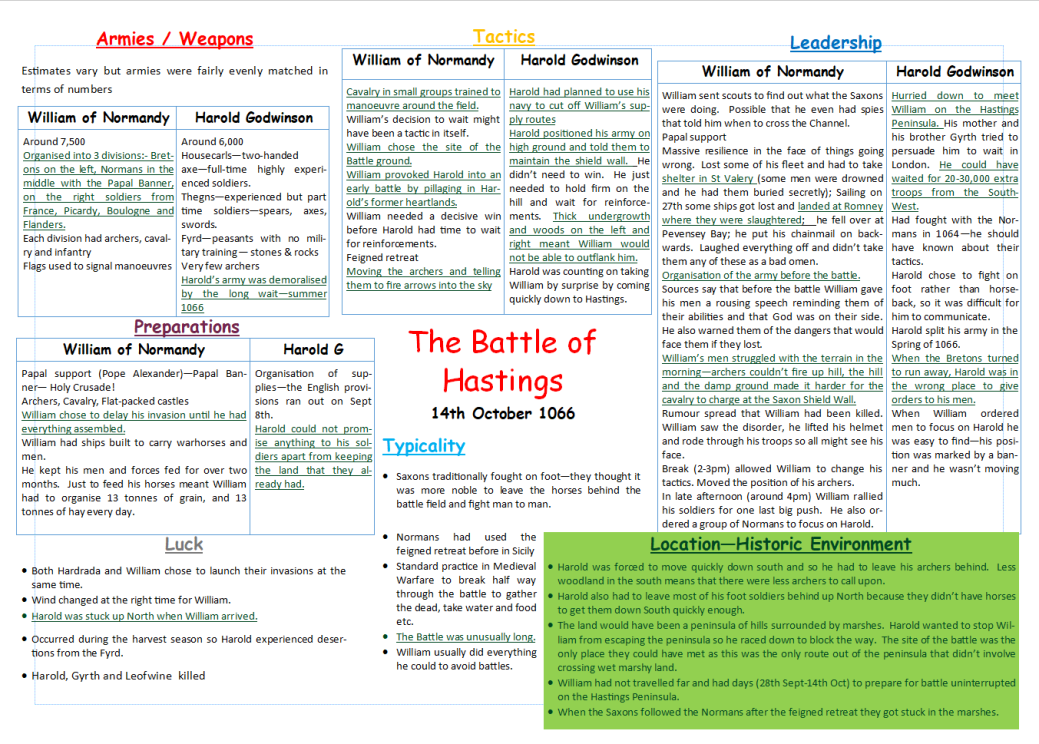
Thanks to Tracy Bowen and the fab history team at Fulford School for sharing this mind map for Hastings, designed to help students prep for the AQA GCSE Historic Environment topic.

At our recent YorkClio network meeting we spent our time talking about enquiries. Colleagues brought enquiries they wanted to improve and enquiries they felt were working. It was both useful and invigorating to put the YorkClio hive mind to work. We couldn’t record the discussions, but we are sharing a couple of the resources here.
The Crusades was a key topic. What do we want students to learn at Key Stage 3 in a few lessons about the Crusades? How does this learning ‘fit’ into the overall history curriculum? There was a consensus that the consequences of the Crusades are important to teach. Here is a resource from Ben Longworth that can be used as a basis to make cards on this: Crusade Consequences. Colleagues with lots of experience of teaching this topic stressed to us all the importance of doing much work with students to ensure security with the geography, the chronology and the key players.
Another key concern is how to bridge the gaps to build coherent narrative. This is the topic of an article by Natalie Kesterton in September 2019’s Teaching History. She shared with us how she uses bridging narratives in lessons between topics and one is given here: What should we remember 1348-1509 DIFF
Inspired by a session at the Historical Association conference, staff at York College have encouraged their students to engage with the cultural milieu of the periods they study at A Level. This is to help them gain the sense of period and place they need in order to make sense of their new specific topic knowledge. The results of two of them are here. There is a document on culture in Germany in the 20th century and one on 15th and 16th century English and European culture. Nice for other A level students, useful also for students doing GCSE units on all or part of these topics, and definitely nerd-y knowledge – thanks for sharing!

Here are the resources that were explained in the HA 2019 conference in Chester about ‘Women in War’.
The timeline thematic activity:
Women in war over time thematic
Activity using the memorial to the women of the British Empire who did in WW1
Activity about the role of women in WW1 from a transnational perspective
2019 women WW1 sources as inference diagrams – *they are all here.
And go to the ‘slot-ins’ page of this site for Women in War ‘slot-ins’!
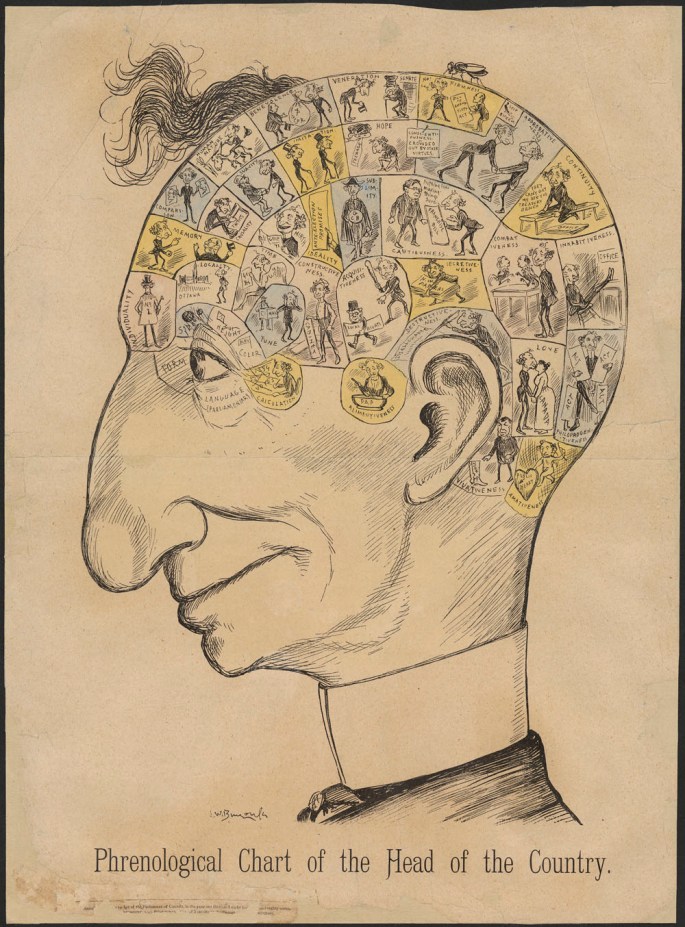
Following on from our work that featured in TH 173 about teaching a history of people with disabilities, we have focused our recent development work on resources for teaching about mental health in the past. Here are the resources that we presented in our session at the HA conference in Chester in May 2019. This work is ongoing and we are also working with colleagues in the Netherlands. It would be great if other people would like to get involved.
Resources are provided here for a single lesson with the EQ: How differently have people viewed mental health?
We have a moral duty to reflect the diverse past in our classrooms and the Equality Duty Act of 2010 requires us to eliminate unlawful discrimination, harassment and victimization, advance equality of opportunity between different groups and foster good relations between different groups. Respecting the past of everyone is part of fostering this.
From this lesson we want students to learn that:
• Mental health has a past and therefore a history
• Ideas of what constitutes mental illness and health have changed over time
• Ideas of what causes and the treatments for mental illness have changed over time due to these changing ideas, but also other cultural and societal changes.
It could be taught at the start of GCSE or as a KS3 study to encourage conceptual understanding of change over time (thematic).
The resources you need are here:
There are also a selection of slot-ins on the YorkClio slot-in page.
The starter images are here:


