Thanks to the wonderful team at Manor CE Academy for starting this season’s YorkClio sharing of ideas and resources. Next term there is lots planned…
Becket Source Explanation and Analysis 2
Henry VIII – Alison Weir interpretation

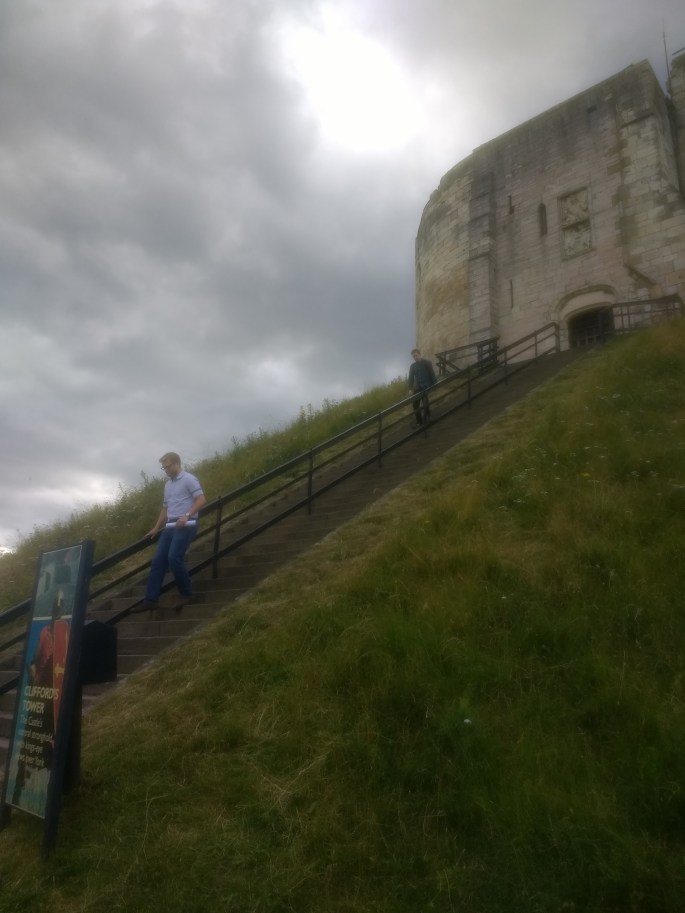
Thanks to the wonderful team at Manor CE Academy for starting this season’s YorkClio sharing of ideas and resources. Next term there is lots planned…
Becket Source Explanation and Analysis 2
Henry VIII – Alison Weir interpretation
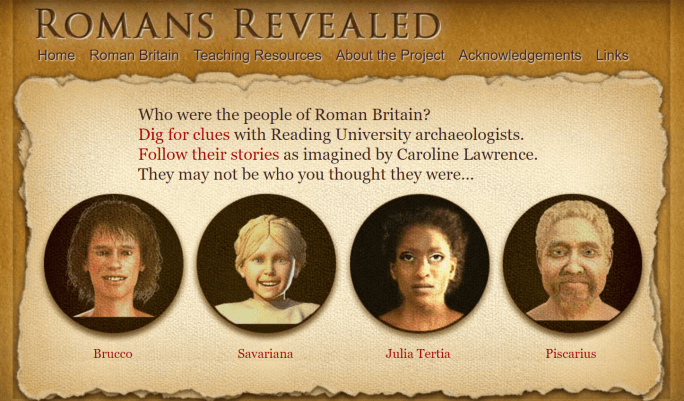
In the Yorkshire Museum are the remains of Julia Tertia. A mixed race Roman woman who died in York and whose skeleton and grave have been excavated by archaeologists. You can find a resource for primary children here and some of it could be used with Y7.
Julia Tertia is sometimes known as the ‘Bangle Lady’ due to bracelets found in her grave. There is a teacher script, PPT and cards that can be adapted for KS3 teaching in order to explore ancient migration and diversity.
On the same site is a KS3 resource for teaching about a teenager living in the York in the years prior to the Black Death. Students can learn about medieval history, osteology and biology and the human life-course. Again, scripts, PPT and resources are all provided here. You can find a 5 min YouTube film about the teenager William Westoby, telling his experience of moving from a village as the second son of a farmer to the city of York. The activity plan then goes on to the consequences of the the Black Death for people like William. Thus, it sets the Black Death in the context of a wider study of medieval life and links village and town life, approaching the topic through a teenager’s life.
Thank you to Prof. Hella Eckardt, Professor of Roman Archaeology at the Department of Archaeology, University of Reading for sharing these with us.

Natalie Kesterton, Head of History at Ryedale School and Chartered History Teacher, has developed several approaches to building chronological coherence in the KS3 curriculum by filling the gaps in the story – the bits we don’t have time to teach. She came to the University of York History PGCE mentors’ meeting and shared her ideas so far. This work is being written up for Teaching History and will be featuring in the SHP and HA conferences, so we were lucky to get a preview. Her work supports the development of students’ chronological understanding and helps them to join up the different depth studies by identifying the big themes. Natalie has kindly shared her resources so far:
final 1660-1750 narrative DIFFERENTIATED X2
final 1660-1750 narrative DIFFERENTIATED
final 1660-1750 narrative DRAFT THREE
Narrative 1216-1348 DRAFT THREE DIFF needs work
Narrative 1216-1348 DRAFT THREE
Which King 1087-1199 DRAFT THREE DIFFERENTIATED

Whose Histories?: Helping busy History teachers keep their curriculum diverse
This short guide was created and has been recently updated by the University of York’s PGCE history trainees in a morning session where they thought about diversity and explored what resources are available. It contains some general principles and ideas for making lessons more diverse, with links to resources. It is not intended to be exhaustive, but to be a contribution to help busy teachers. Please do make suggestions to improve it.

Does your teaching reflect that over 50% of the people in the past were not male? Here is free resource a history of women through 6 objects to help you.
Inspired by the book ‘A History of Women in 100 Objects’ by Maggie Andrews and Janis Lomas, this classroom wall display has been put together by Ruth Lingard. It takes six objects, explains their past and what they reveal about the women to whom they are connected.
The ‘slot-in’ section is also growing. Check out a new addition on Mary Anning.
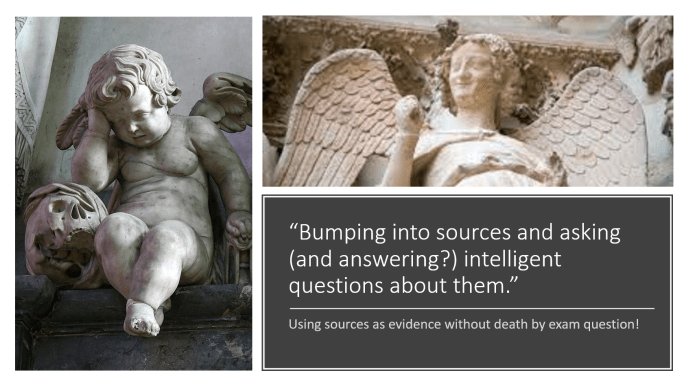
Here is a PPT and some thoughts about using sources as evidence at KS3 and KS4 to do well at GCSE and NOT use endless exam questions because: 1) there is more to education, 2) it’s not the way to build secure knowledge for strong results.
The story of the Pilgrimage of Grace PoG notes sheet PoG fact sheet
A taxonomy of substantive knowledge Brixton burning the riots remembered

Resources for this enquiry from the HA teachers’ course with the British Library re Anglo-Saxon kingdoms.
The lesson plan is here: What sort of England did William conquer lesson plan
The PPT is here: Anglo-Saxons
The sources and chart are here: Sources Chart for sources
Teacher crib sheet for source chart
The interpretations are here:
Baxter balance and faction intBL blogpost intHenry poetry intLacey consent and creativity intLacey life tough intLacey prop USA intMorris church intWood on what is lost intWood rights and property intWood women int
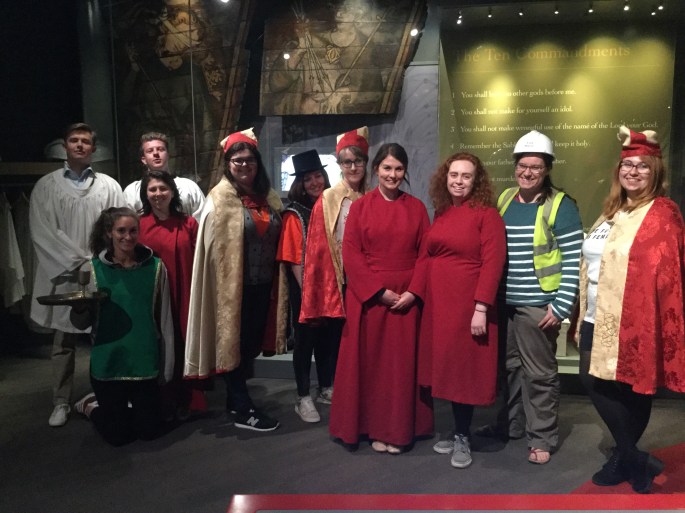
The teaching materials that were presented in November 2018 at Yorkshire History Forum are here for your use. York PGCE medieval religion lessons-FINAL
They are:
These materials were developed by the University of York PGCE historians 2017-18. To do this they worked with Jeremy Muldowney from York Minster and with Dr John Jenkins, University of York and other members of the Centre for Christianity and Culture. The materials were edited by Helen Snelson.

Attached is Alex Ford’s PPT from our September 2018 meeting. You’ll find the ‘5 things we have learnt’ from the summer’s GCSE results and lots of useful ideas for re-planning Key Stage 3. First Fruit Alex Ford

A couple of really interesting resources that have come to our attention.
Firstly, a sourcebook about World War One that concentrates on the global dimension. Great for sources to show diversity and that it was, well, a WORLD War, with global impact.
Secondly, an interesting website of resources about secondary schooling since 1945. A great opportunity to build some oral history around this!
 yorkclio